
Ask anyone who has lived in the Phoenix metro for a while about the water and you will get the same answer. It is hard — heavily mineralized — and everybody knows it. What people are less clear on is exactly how that hardness shortens the life of a water heater, and whether treating the water is actually worth the money.
What Hard Water Actually Is
Hard water simply means water carrying a high concentration of dissolved minerals, mostly calcium and magnesium. It is not a health problem and it is not contamination. It is a plumbing problem, and in this valley it is a significant one.
You see the visible effects everywhere: white crust on faucets and shower heads, spots on glasses that survive the dishwasher, soap that will not lather properly, laundry that comes out stiffer than it should. Those are irritating but cosmetic. The expensive part is what you cannot see.
What It Does Inside a Water Heater
When hard water is heated, those dissolved minerals come out of solution and settle. In a conventional tank water heater they settle to the bottom of the tank and form a layer of scale — and the bottom of the tank is exactly where the burner is.
So the burner is now trying to heat the water through an insulating crust. It runs longer to reach the same temperature, which costs you money on the gas bill. Worse, the steel at the bottom of the tank gets hotter than it was designed to, because the heat cannot transfer away into the water efficiently. That thermal stress is what cracks tanks and kills water heaters early.
The rumbling or popping noise people describe in an older heater is exactly this — water trapped under the scale layer boiling and forcing its way out. If your heater has started making that noise, it is telling you something.
It Is Not Just the Water Heater
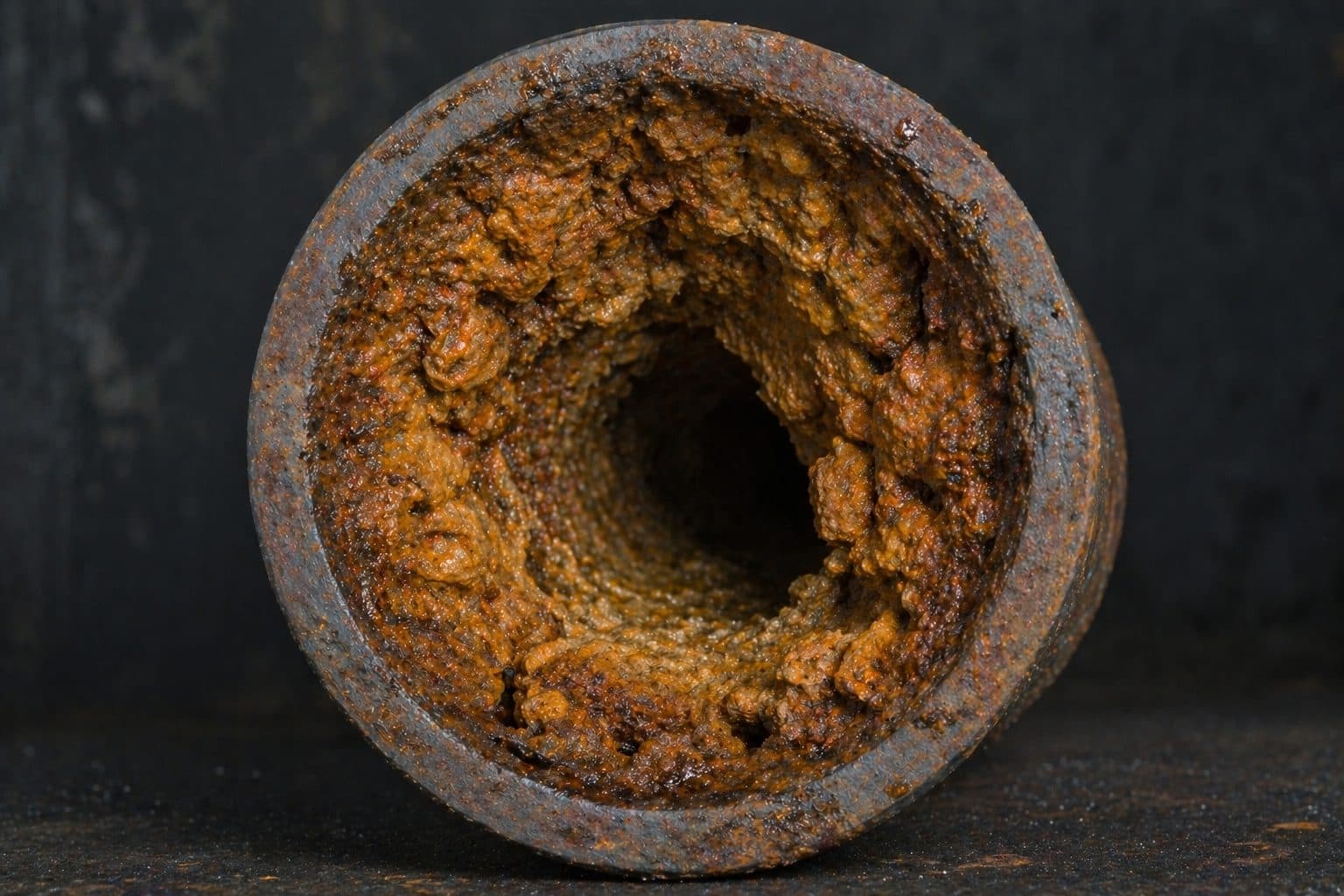
The same scale builds up inside pipes, narrowing them gradually over years. It seizes the moving parts inside faucet cartridges and valves, which is why fixtures here wear out faster than they should. Dishwashers and washing machines take the same abuse.
Tankless water heaters are, if anything, more sensitive to it. A tankless unit heats water on demand through a compact heat exchanger, and scale in that heat exchanger hits efficiency quickly. Anyone installing tankless on untreated Valley water should be planning on descaling it regularly. See our page on tankless water heaters for more on that.
Is Treating It Worth the Money?
In our experience here, generally yes — but the honest answer depends on your situation, which is why we would rather look at it than sell you a system over the phone.
The case for it is straightforward enough. A water heater is a real expense, and installing a new one on the same untreated supply gets you the same outcome in another eight years or so. If you are replacing a heater anyway, that is the natural moment to have the conversation, because you are protecting a brand new investment rather than an old one.
There are two broad options. A traditional softener uses salt and ion exchange to actually remove the hardness minerals — it is the most effective approach and it is what most Valley homes end up with. Salt-free conditioners leave the minerals in but alter them so they are less inclined to form scale; less maintenance, no salt, but not the same result. Which suits you comes down to what is bothering you and how much upkeep you want. We go through both on our water conditioning page.
What We Would Tell You
We do not represent a particular manufacturer and we are not working to a sales target, so there is no version of this where we push you toward the most expensive system on the shelf. If your heater is young and your water is bothering you cosmetically, a conditioner may be plenty. If you are about to spend on a new water heater, protecting it properly is a sensible call.
And if you already have a system that has stopped working the way it should, bring us in to service it before you replace it. Quite often that is all it needs.
Give us a ring on (480) 827-1162 or send us a message and tell us what you are seeing.
Adair Plumbing
Family owned plumber serving Mesa and the Valley since 1978. Have a question? We're happy to help.